
Engineering – VCERT (KS4)
|
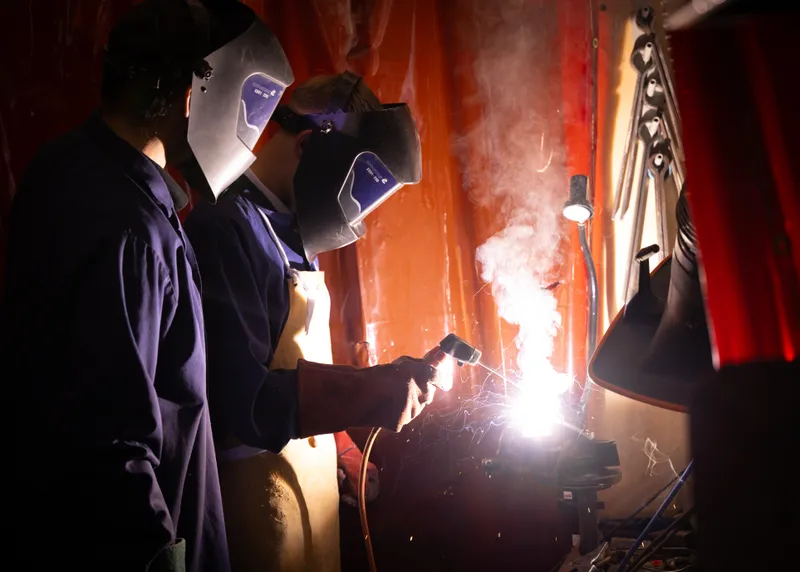
Engineering at NSSFC provides students with practical manufacturing skills and applied theoretical knowledge aligned to real industry practice. Students follow the NCFE Level 1/2 Technical Award in Engineering (VCERT). Core strands:
The curriculum is sequenced so that Year 10 builds technical competence and foundational theory, while Year 11 consolidates learning through synoptic coursework and external examination preparation. Assessment includes:
QLA from mock examinations informs responsive reteaching in materials science, tolerances, calculations and extended written responses. Independent learning includes production planning, design refinement, revision of key terminology and exam practice. |
 |
Key Stage 3
Engineering knowledge and workshop foundations are developed within the KS3 Technology carousel.
Students build:
-
Safe workshop practice
-
Marking out and measuring accuracy
-
Basic metalwork and fabrication
-
CAD introduction
-
Evaluation and reflection skills
This foundation supports progression into the VCERT pathway at KS4.
Key Stage 4 – NCFE VCERT Engineering
Students complete both practical and theoretical units aligned to industry practice.
Curriculum Structure
-
Engineering disciplines and sectors
-
Materials science (ferrous, non-ferrous, polymers, composites)
-
Manufacturing processes (cutting, shaping, forming, casting)
-
CAD/CAM and digital workflow
-
Technical drawing and BS 8888 standards
-
Synoptic project (design, manufacture, evaluation)
-
External written examination
Year 10 focuses on developing precision hand skills and understanding engineering principles.
Year 11 integrates theory with applied manufacture and prepares students for both the synoptic assessment and examination.
KS4 Curriculum Overview
| Term | Year 10 | Year 11 |
|---|---|---|
| Autumn 1 | Hacksaw Project – Core Hand Skills | Synoptic Task – Research & Design |
| Autumn 2 | Tractor Project – Fabrication & CAD | Synoptic Task – Development & Planning |
| Spring 1 | Casting Keyring – CAD/CAM & Pewter | Synoptic Task – Manufacture |
| Spring 2 | Engineering Theory – Materials & Processes | Synoptic Task – Evaluation & Completion |
| Summer 1 | Bottle Opener Project – Precision Manufacture | Theory Consolidation & Mock QLA |
| Summer 2 | Examination Preparation | Final Examination Preparation & Bespoke Intervention |
Year 11 includes structured revision cycles, exam command word practice and targeted intervention informed by QLA.
Sixth Form
There is currently no KS5 Engineering course. Students are supported in progressing into:
-
Engineering apprenticeships
-
T Levels in Engineering and Manufacturing
-
Level 3 vocational routes
-
A Level Product Design or related STEM pathways
Literacy, Careers and Personal Development
Vocabulary
Students develop secure understanding of technical terminology including tolerance, orthographic projection, ferrous, ductility, tensile strength, datum edge, CNC, CAD, CAM and sustainability.
Knowledge Organisers
Each unit is supported by structured glossaries and recall activities to reinforce exam terminology and technical precision.
Careers Links
The curriculum introduces pathways including:
-
Mechanical engineer
-
Fabrication engineer
-
CNC machinist
-
CAD technician
-
Materials scientist
-
Quality control inspector
-
Aerospace, automotive and renewable energy sectors
Lessons explicitly link practical tasks to real engineering roles and industry expectations.
SMSC / Personal Development
Engineering promotes:
-
Moral responsibility through strict health and safety practice
-
Social collaboration in workshop environments
-
Cultural awareness of global engineering innovation
-
Resilience through iterative problem-solving
-
Pride in craftsmanship and professional standards
Students develop independence, accuracy, perseverance and accountability — characteristics essential for both further study and industry.